Main Content

Engagement Opportunities

Review of draft management plan for Dolphin and Union caribou - extended

Date

This engagement opportunity is now closed. Thank you for your comments! 

The Management Plan for the Dolphin and Union Caribou (Rangifer tarandus groenlandicus x pearyi) in the Northwest Territories and Nunavut was developed in 2017 and released in 2018.

Photo: Kim Poole/GNWT 


The public is invited to comment on the draft management plan for Dolphin and Union caribou in the Northwest Territories and Nunavut. Comments are due by June 16, 2017.

Materials:

Please consider the following questions in providing comments:

  • Do you have suggestions to improve the draft management plan?
  • What actions do you think should be taken to manage and conserve Dolphin and Union caribou?

Send your comments to:

Environment and Natural Resources
Government of the Northwest Territories
Box 1320, Yellowknife, NT X1A 2L9
Phone: (867) 767-9237 ext. 53214
Fax: (867) 873-0293
Email:   sara@gov.nt.ca

Proposed changes to the NWT List of Species at Risk - Wood Bison and Common Muskrat

Date
muskratbison_image

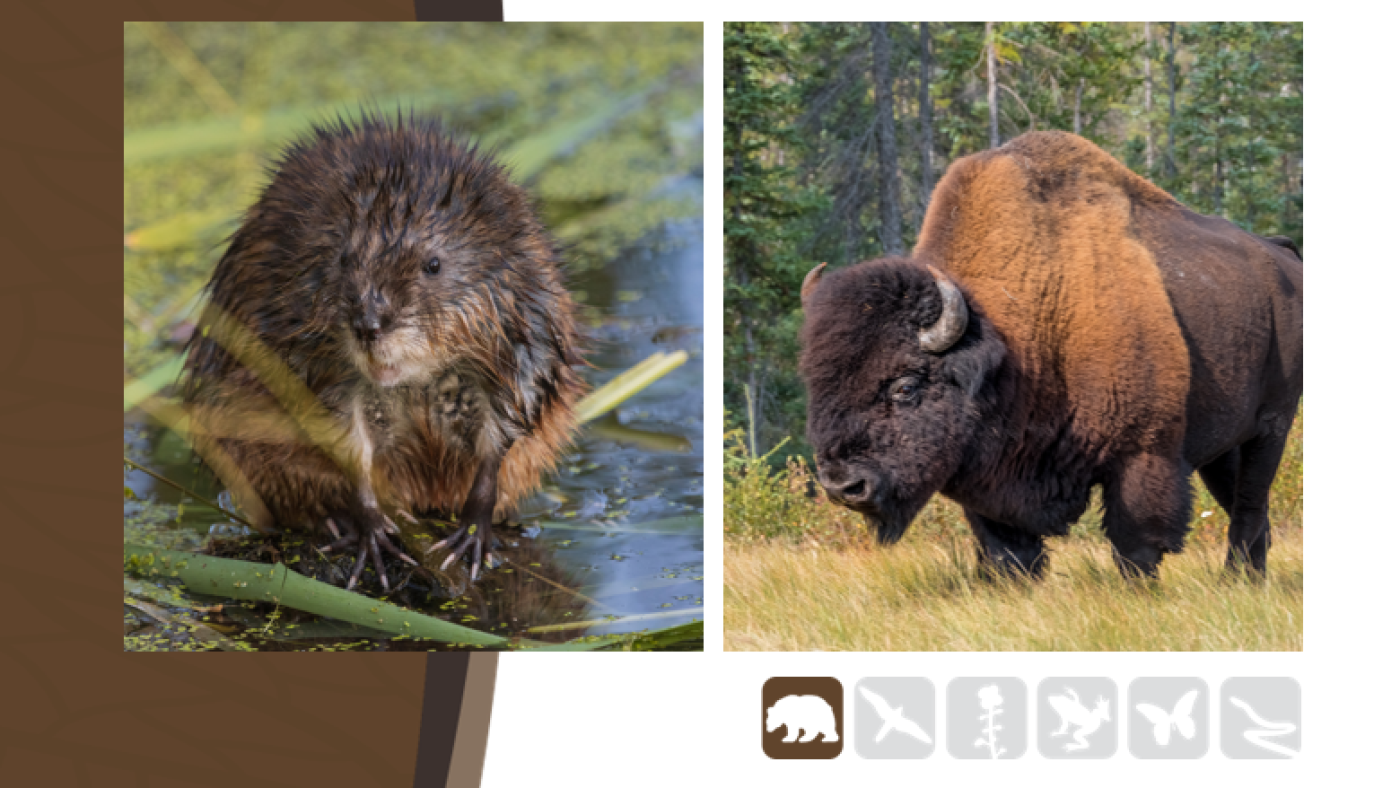
The public is invited to comment on the proposal to add common muskrat to the NWT List of Species at Risk and to extend the listing of wood bison.

Comments are due by November 15, 2026.

Photos: Common Muskrat, Liam Cowan / Wood Bison, Pierre-Emmanuel Chaillon


Listing proposals

Common muskrat is under consideration for listing as Special Concern on the NWT List of Species at Risk. It was assessed by the NWT Species at Risk Committee as a species of Special Concern in April 2026. Special Concern means the species is at risk of becoming Threatened or Endangered because of a combination of biological characteristics and identified threats.

Wood bison is being considered for re-listing as Threatened on the NWT List of Species at Risk. This species is currently listed as Threatened and was reassessed in April 2026 with no change in status. Threatened means it could become Endangered if nothing is done to reverse the factors putting it at risk.

Please consider the following questions when providing comments:

Common Muskrat

  • Should common muskrat be added to the NWT List of Species at Risk as a species of Special Concern? Why or why not?
  • Would the adding this species to the NWT List of Species at Risk have positive or negative impacts? What would they be?
  • Is there new or missing information that was not considered in the status report for this species? If so, can you provide it to us or tell us where to find it?

Wood Bison

  • Should wood bison continue to be listed as Threatened on the NWT List of Species at Risk? Why or why not?
  • Wood bison has been listed as a Threatened species in the NWT since 2017. A recovery strategy was completed in 2019 and is being implemented. How has the listing affected you or your community? Would extending the listing for this species for another 10 years have positive or negative impacts? What would they be?
  • Is there new or missing information that was not considered in the status report for this species? If so, can you provide it to us or tell us where to find it?

Have your say!

Comments on the assessments and potential listing of common muskrat and wood bison can be submitted by completing a survey (English and French links below) or by sending your comments to the Species at Risk Secretariat (address below).

Species at Risk Secretariat

PO Box 1320

Yellowknife, NT X1A 2L9

Phone (toll-free): 1-855-783-4301

Fax: 1-867-873-0221

Email: SARA@gov.nt.ca

Next steps

The Conference of Management Authorities will meet in December 2026 and February 2027 to consider all comments received and decide on the listings. A summary of the information used by each Management Authority to make its decision will be found in the consensus agreement on listing for each species.

Listing decisions for common muskrat and wood bison are expected by July 2027.

Links

Common Muskrat

Wood Bison

Draft Species Status Report for Porcupine Caribou and Barren-ground Caribou in the NWT

Date
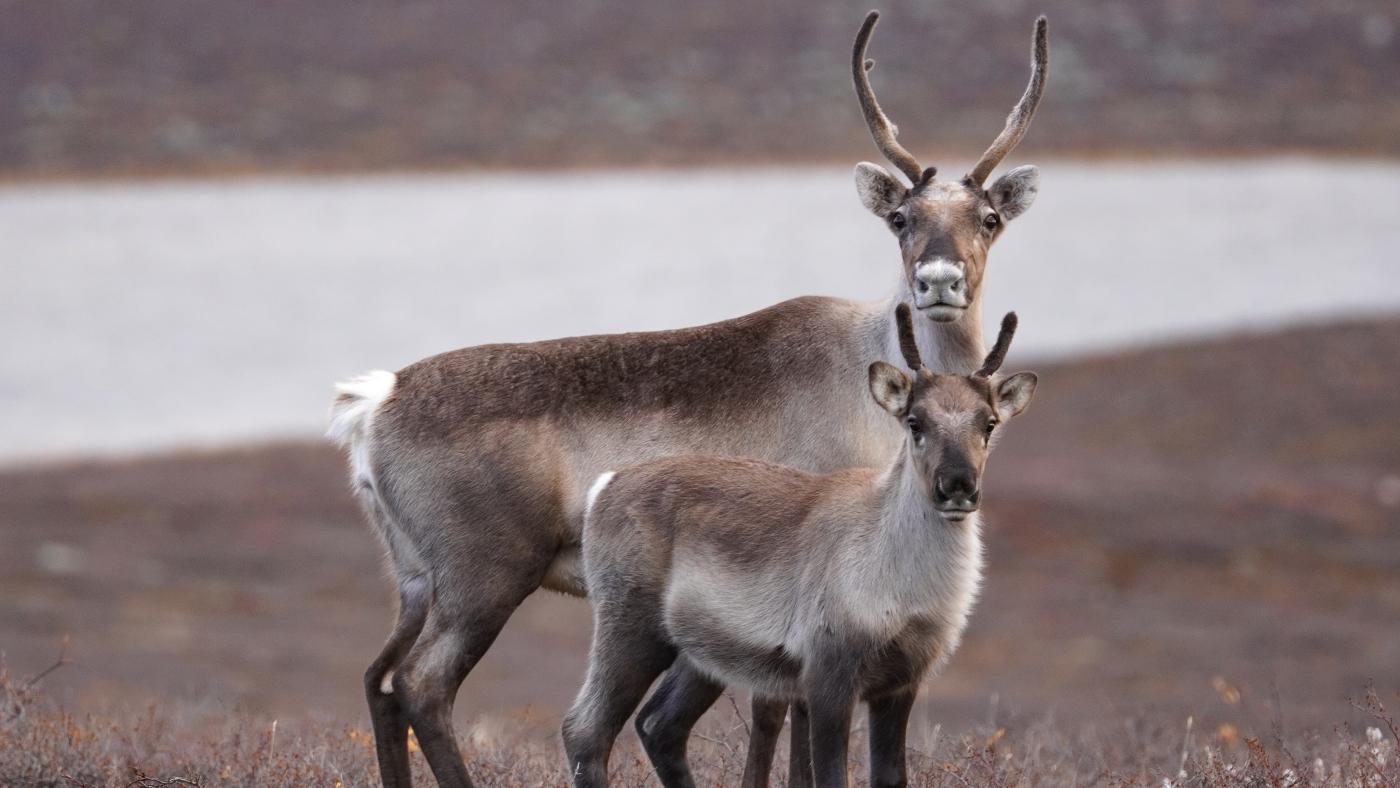
Beverly caribou, Lac de Gras, NWT. Credit: Petter Jacobsen

The NWT Species at Risk Committee (SARC) has prepared the Draft Species Status Report for Porcupine Caribou and Barren-ground Caribou (Tuktoyaktuk Peninsula, Cape Bathurst, Bluenose-West, Bluenose-East, Bathurst, Beverly, Ahiak, Qamanirjuaq, Wager Bay and Lorillard subpopulations) (Rangifer tarandus groenlandicus) in the NWT and is requesting review of the information in the report.

  • Fact sheet on the Porcupine caribou and barren-ground caribou status report and assessment

The species status report is a comprehensive document that compiles and analyzes the best available Indigenous, community, and scientific information on the biological status of Porcupine caribou and barren-ground caribou in the NWT, as well as existing and potential threats and positive influences. The report was prepared in advance of the scheduled 2027 assessment of Porcupine caribou and barren-ground caribou in the NWT.

If you are interested in reviewing the report and submitting comments, please use the following questions to guide your review:

  • Has the report fully investigated the best available sources of information?
  • Is the information from those sources portrayed accurately?

Comments on the draft report must be submitted to the Species at Risk Secretariat by no later than January 22, 2027.

Comments can be submitted via email (SARA@gov.nt.ca), fax (867-873-0221), or via standard mail at the address below:

Species at Risk Secretariat
SC6, c/o Environment and Climate Change
Government of the Northwest Territories
PO Box 1320
Yellowknife, NT X1A 2L9

Please note the report is a draft and must not be cited without permission of the Species at Risk Committee Chairperson. If you have any questions about reviewing draft status reports, or if you require the report in a different format, please contact the Species at Risk Secretariat.

Photo: Barren-ground caribou -  P. Jacobsen

Quick facts

  • The Species at Risk (NWT) Act provides a process and tools to identify, protect and recover species at risk in the NWT.
  • The NWT Species at Risk Committee (SARC) is an independent committee of experts that assesses the biological status of species at risk in the NWT.
  • In 2017, the NWT Species at Risk Committee (SARC) assessed the territorial status of barren-ground caribou (Tuktoyaktuk Peninsula, Cape Bathurst, Bluenose-West, Bluenose-East, Bathurst, Beverly, Ahiak, and Qamanirjuaq) as Threatened in the NWT.
  • SARC considered Porcupine caribou separately as a geographically distinct population. Porcupine caribou were assessed as Not at Risk in the NWT.
  • In 2018, barren-ground caribou, not including the Porcupine caribou, was added to the NWT List of Species at Risk as a Threatened species in the NWT under the territorial Species at Risk (NWT) Act.
  • Species on the NWT List of Species at Risk are reassessed every 10 years to evaluate new information and determine if its status has changed.
  • Barren-ground caribou are scheduled for reassessment in 2027.

Links

Draft Species Status Report for Little Brown Myotis and Northern Myotis in the NWT

Date
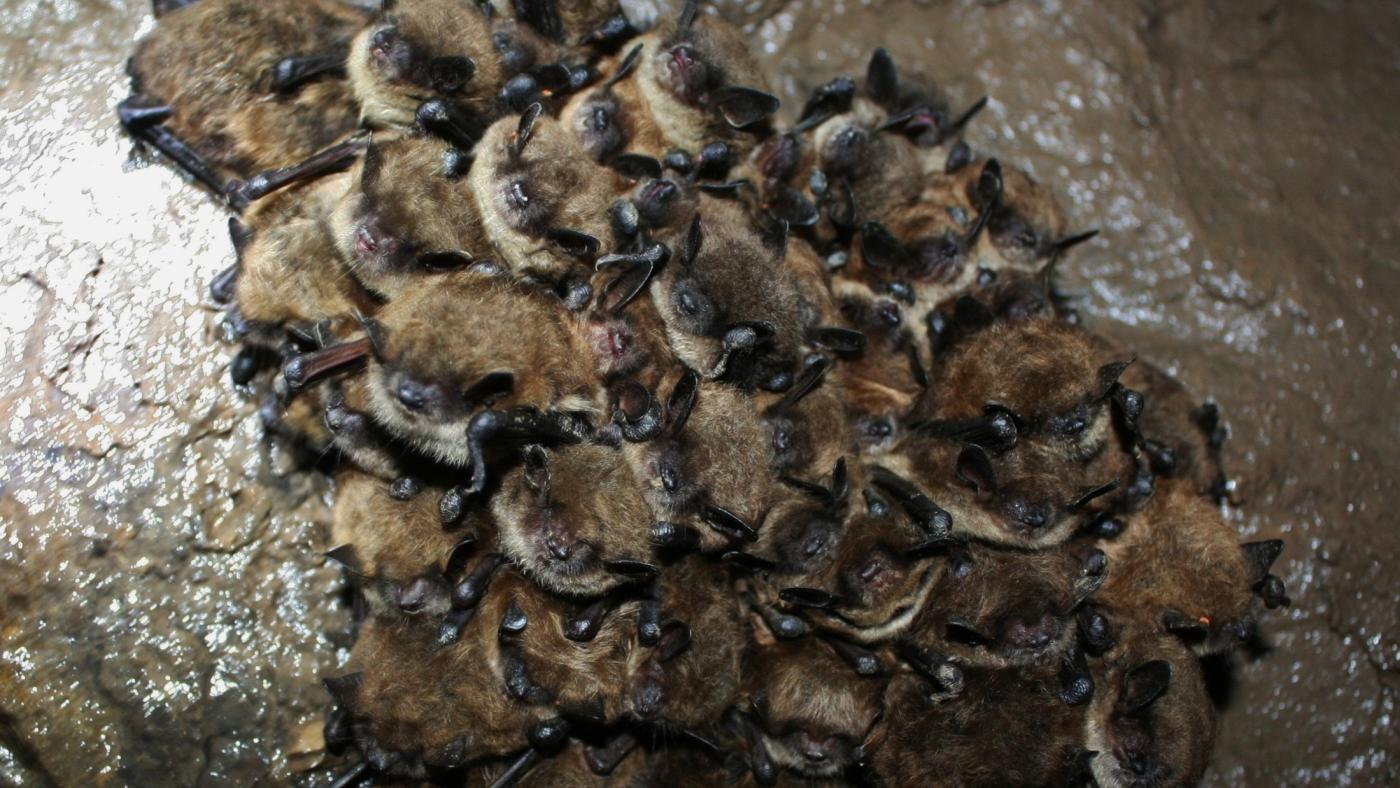
Myotis Spp. Credit: J. Reimer

The NWT Species at Risk Committee (SARC) has released the Draft Species Status Report for Little Brown Myotis (Myotis lucifugus) and Northern Myotis (Myotis septentrionalis) in the NWT for review. The species status report is a comprehensive report that compiles and analyzes the best available Indigenous, community, and scientific information on the biological status of little brown myotis and northern myotis in the NWT, as well as existing and potential threats and positive influences. The report was prepared in advance of the scheduled 2027 assessment of little brown myotis and northern myotis in the NWT.

  • Fact sheet on the little brown myotis and northern myotis status report and assessment

 If you are interested in reviewing the report and submitting comments, please use the following questions to guide your review:

  • Has the report fully investigated the best available sources of information?
  • Is the information from those sources portrayed accurately?

Comments on the draft report must be submitted to the Species at Risk Secretariat by no later than January 8, 2027.

Comments can be submitted via email (SARA@gov.nt.ca), fax (867-873-0221), or via standard mail at the address below:

Species at Risk Secretariat
SC6, c/o Environment and Climate Change
Government of the Northwest Territories
PO Box 1320
Yellowknife, NT X1A 2L9

Please note the report is a draft and must not be cited without permission of the Species at Risk Committee Chairperson. If you have any questions about reviewing draft status reports, or if you require the report in a different format, please contact the Species at Risk Secretariat.

Photo: Myotis spp. -  J. Reimer

Proposed NWT Recovery Strategy for Dolphin and Union Caribou – Public Review

Date
Dolphin and Union caribou

The public is invited to comment on a proposed Recovery Strategy for Dolphin and Union Caribou in the NWT

Dolphin and Union caribou are considered a species at risk in the Northwest Territories. They were listed as an Endangered species in 2024 under the Species at Risk (NWT) Act.

Under the Act, a recovery strategy must be developed for an Endangered species. The strategy will provide guidance on the long-term conservation and recovery of Dolphin and Union caribou in the NWT.

Comments on the recovery strategy for Dolphin and Union caribou can be submitted to the Conference of Management Authorities until February 15, 2026.

Complete a survey or send your comments directly to the Wildlife Management Advisory Committee (NWT) or the Species at Risk Secretariat.

Photo: Xavier Fernandez Aguilar

Contact

Species at Risk Secretariat

PO Box 1320

Yellowknife, NT X1A 2L9

Phone (toll-free): 1 (855) 783-4301

Fax: 1 (867) 873-0221

Email: SARA@gov.nt.ca

Our approach to recovery

The proposed NWT recovery strategy adopts the Management Plan for the Dolphin and Union Caribou in the Northwest Territories and Nunavut, published in 2018. This includes the goal, objectives and approaches set out in the current joint management plan.

The proposed recovery strategy also includes an NWT addition which points to updated information on Dolphin and Union caribou from Indigenous, community and scientific sources that have become available in the years since the management plan was released.

This approach ensures up-to-date guidance is in place for the recovery of the species while preserving the collaborative and coordinated nature of our NWT-Nunavut approach to Dolphin and Union caribou conservation and management—in particular, the shared goal, objectives and approaches. 

About the proposed recovery strategy

The NWT recovery strategy has two parts:

  • The existing Management Plan for Dolphin and Union Caribou in the Northwest Territories and Nunavut, which includes shared goals and objectives for the conservation and recovery of Dolphin and Union caribou, approaches to achieve those objectives, and threats and positive influences to the species and its habitat across its range; and
  • An addition from the Northwest Territories, which points to updated information for Dolphin and Union caribou in the NWT:
    • NWT Status Report and Reassessment (2023)
    • NWT Progress Report (2023)
    • Addendum to the COSEWIC status report (2024) prepared by co-management partners in NWT and Nunavut, which provides information that more fully reflects existing Inuit Qaujimajatuqangit, traditional knowledge, and local knowledge on Dolphin and Union caribou

The management plan was developed collaboratively by Inuvialuit and Inuit organizations and the governments of NWT, Nunavut and Canada, giving equal consideration to Indigenous and community knowledge, Inuit Qaujimajatuqangit, and science. The plan was approved/adopted by the Nunavut Wildlife Management Board, Government of Nunavut, Government of the Northwest Territories and the Wildlife Management Advisory Council (NWT). The Government of Canada also adopted it as the national management plan for Dolphin and Union caribou in Canada.

The NWT addition was developed collaboratively by the Conference of Management Authorities (CMA)—the wildlife co-management boards and governments that share responsibility for Dolphin and Union caribou in the NWT. All CMA decisions are made by consensus.

Members of the CMA for Dolphin and Union caribou are: Wildlife Management Advisory Council (NWT) and Government of the Northwest Territories. 

Links

Proposed changes to the NWT List of Species at Risk

Date
engagement_graphic_-_amphibians.jpg

This engagement opportunity is now closed. Thank you for your comments! 

Decisions on up-listing northern leopard frog and extending the listing of western toad are expected by August 2026.

Photos: (Left) Northern leopard frog, Kris Kendell; (Right) Western toad, Yannick Letailleur

Listing proposals

Northern leopard frog is being considered for up-listing to Endangered on the NWT List of Species at Risk. It is currently listed as a Threatened species but was reassessed as Endangered in April 2025. Endangered means the species could disappear from the NWT in the near future.

Western toad is being considered for re-listing as Threatened on the NWT List of Species at Risk. This species is currently listed as Threatened and was reassessed in April 2025 with no change in status. Threatened means it could become Endangered if nothing is done to reverse the factors putting it at risk.

Please consider the following questions when providing comments:

Northern leopard frog

  • Should northern leopard frog be up-listed to Endangered on the NWT List of Species at Risk? Why or why not?
  • Northern leopard frog has been listed as a Threatened species in the NWT since 2015. A management plan for amphibians was completed in 2017. How has the listing affected you or your community? Would the up-listing have positive or negative impacts? What would they be?
  • Is there new or missing information that was not considered in the status reports for this species? If so, can you provide it to us or tell us where to find it?

Western toad

  • Should western toad continue to be listed as Threatened on the NWT List of Species at Risk? Why or why not?
  • Western toad has been listed as a Threatened species in the NWT since 2016. A management plan for amphibians was completed in 2017. How has the listing affected you or your community? Would extending the listing for this species for another 10 years have positive or negative impacts? What would they be?
  • Is there new or missing information that was not considered in the status reports for this species? If so, can you provide it to us or tell us where to find it?

Have your say!

Comments on the assessments and potential listing of northern leopard frog and western toad can be submitted by completing a survey (English and French links below) or by sending your comments to the Species at Risk Secretariat (address below).

Species at Risk Secretariat

PO Box 1320

Yellowknife, NT X1A 2L9

Phone (toll-free): 1-855-783-4301

Fax: 1-867-873-0221

Email: SARA@gov.nt.ca

Next steps

The Conference of Management Authorities will meet in December 2025 and February 2026 to consider all comments received and decide on the listings. A summary of the information used by each Management Authority to make its decision will be found in the consensus agreement on listing for each species.

Listing decisions for northern leopard frog and western toad are expected by August 2026.

Links

NORTHERN LEOPARD FROG

WESTERN TOAD

Draft Species Status Report for Wood Bison in the NWT

Date
Wood Bison Credit: Pierre-Emmanuel Chaillon

This engagement opportunity is now closed. Thank you for your comments! 

The species status report for wood bison was finalized in April 2026.


The NWT Species at Risk Committee (SARC) has released the draft Species Status Report for Wood Bison (Bison bison athabascae) in the NWT for review. The species status report is a comprehensive report that compiles and analyzes the best available Indigenous, community, and scientific information on the biological status of wood bison in the NWT, as well as existing and potential threats and positive influences. The report was prepared in advance of the scheduled 2026 assessment of wood bison in the NWT.

  • Fact sheet on the wood bison status report and assessment

If you are interested in reviewing the report and submitting comments, please use the following questions to guide your review:

  • Has the report fully investigated the best available sources of information?
  • Is the information from those sources portrayed accurately?

Comments on the draft report must be submitted to the Species at Risk Secretariat by no later than January 9, 2026.

Comments can be submitted via email (SARA@gov.nt.ca), fax (867-873-0221), or via standard mail at the address below:

Species at Risk Secretariat
SC6, c/o Environment and Climate Change
Government of the Northwest Territories
PO Box 1320
Yellowknife, NT X1A 2L9

Please note that the report is a draft and is not to be cited without permission of the Species at Risk Committee Chairperson. If you have any questions about reviewing draft status reports, or if you require the report in a different format, please contact the Species at Risk Secretariat.

Draft Species Status Report for Common Muskrat in the NWT

Date
Muskrat Credit: Liam Cowan

This engagement opportunity is now closed. Thank you for your comments! 

The species status report for common muskrat was finalized in April 2026.


The NWT Species at Risk Committee (SARC) has released the draft Species Status Report for Common Muskrat (Ondatra zibethicus) in the NWT for review. The species status report is a comprehensive report that compiles and analyzes the best available Indigenous, community, and scientific information on the biological status of muskrat in the NWT, as well as existing and potential threats and positive influences. The report was prepared in advance of the scheduled 2026 assessment of muskrat in the NWT.

  • Fact sheet on the common muskrat status report and assessment

 If you are interested in reviewing the report and submitting comments, please use the following questions to guide your review:

  • Has the report fully investigated the best available sources of information?
  • Is the information from those sources portrayed accurately?

Comments on the draft report must be submitted to the Species at Risk Secretariat by no later than January 9, 2026.

Comments can be submitted via email (SARA@gov.nt.ca), fax (867-873-0221), or via standard mail at the address below:

Species at Risk Secretariat
SC6, c/o Environment and Climate Change
Government of the Northwest Territories
PO Box 1320
Yellowknife, NT X1A 2L9

Please note that the report is a draft and is not to be cited without permission of the Species at Risk Committee Chairperson. If you have any questions about reviewing draft status reports, or if you require the report in a different format, please contact the Species at Risk Secretariat.

Proposed Changes to the NWT List of Species at Risk – Hairy Braya and Snake

Date
2024 SARC Assessments

This engagement opportunity is now closed. Thank you for your comments! 

  • The listing term for hairy braya was extended in August 2025. This species will remain on the NWT List of Species at Risk as a Threatened species for another 10 years.
  • Red-sided garter snake has not been added to the NWT List of Species at Risk.

Listing proposals

Hairy braya is identified for re-listing as Threatened on the NWT List of Species at Risk. This plant species was reassessed in April 2024. A status of Threatened means it could become Endangered if nothing is done.

Red-sided garter snake is identified for listing on the NWT List of Species at Risk. This species was assessed for the first time in April 2024 as a species of Special Concern, which means it is at risk of becoming Threatened or Endangered.

Please consider the following questions when providing comments:

Hairy braya

  • Should hairy braya continue to be listed as Threatened on the NWT List of Species at Risk? Why or why not?
  • Hairy braya was first listed as a Threatened species in the NWT in 2014 and a recovery strategy was completed in 2016. How has the listing affected you or your community? Would the re-listing have positive or negative impacts? What would they be?
  • Is there new or missing information that was not considered in the latest status report for this species? If so, can you provide it to us or tell us where to find it?

Red-sided garter snake

  • Should red-sided garter snake be added to the NWT List of Species at Risk as a species of Special Concern? Why or why not?
  • Would listing this species have positive or negative impacts for you and your community? What would they be?
  • Is there new or missing information that was not considered in the status report for this species? If so, can you provide it to us or tell us where to find it?

How can I share my comments?

All NWT residents are invited to submit comments on the assessments and potential listing of hairy braya and red-sided garter snake by November 1, 2024.

You can also reach the Conference of Management Authorities by contacting:

NWT Species at Risk Secretariat
PO Box 1320
Yellowknife, NT X1A 2L9
Phone (toll-free): 1-855-783-4301
Fax: 1-867-669-0905
Email: SARA@gov.nt.ca

Next steps

The Conference of Management Authorities will meet in December 2024 and February 2025 to consider all comments received. A summary of the information used by each Management Authority to make its decision will be found in the consensus agreement on listing for each species.

Listing decisions for hairy braya and red-sided garter snake are expected by July 2025.

Links

Hairy braya

Red-sided garter snake

Draft Species Status Report for Amphibians in the NWT

Date
Photo (left to right): Canadian toad (K. Kendell), Western toad (B. Brunen), Northern leopard frog (The Wilder Institute)

This engagement opportunity is now closed. Thank you for your comments! 

The species status report for amphibians was finalized in May 2025.


The NWT Species at Risk Committee (SARC) has released the draft Species Status Report for Amphibians in the NWT for review. The species status report is a comprehensive report that compiles and analyzes the best available information on the biological status of Canadian toad (Anaxyrus hemiophrys), Western toad (Anaxyrus boreas) and Northern leopard frog (Lithobates pipiens) in the NWT, as well as existing and potential threats and positive influences. The report was prepared in advance of the scheduled 2025 reassessment of Western toad and Northern leopard frog, and the assessment for the first time of the Canadian toad in the NWT.

The draft multi-species status report can be opened here.

If you are interested in reviewing the report and submitting comments, please use the following questions to guide your review:

  • Has the report fully investigated the best available sources of information?
  • Is the information from those sources portrayed accurately?

Comments on the draft report must be submitted to the Species at Risk Secretariat by no later than December 18, 2024.

Comments can be submitted via email (SARA@gov.nt.ca), fax (867-873-0293), or via standard mail at the address below:

NWT Species at Risk Secretariat
SC-5, c/o Department of Environment and Climate Change
Government of the Northwest Territories
PO Box 1320
Yellowknife, NT X1A 2L9

Please note that the report is a draft and is not to be cited without permission of the Species at Risk Committee Chairperson. If you have any questions about reviewing draft status reports, or if you require the report in a different format, please contact the Species at Risk Secretariat.