Main Content

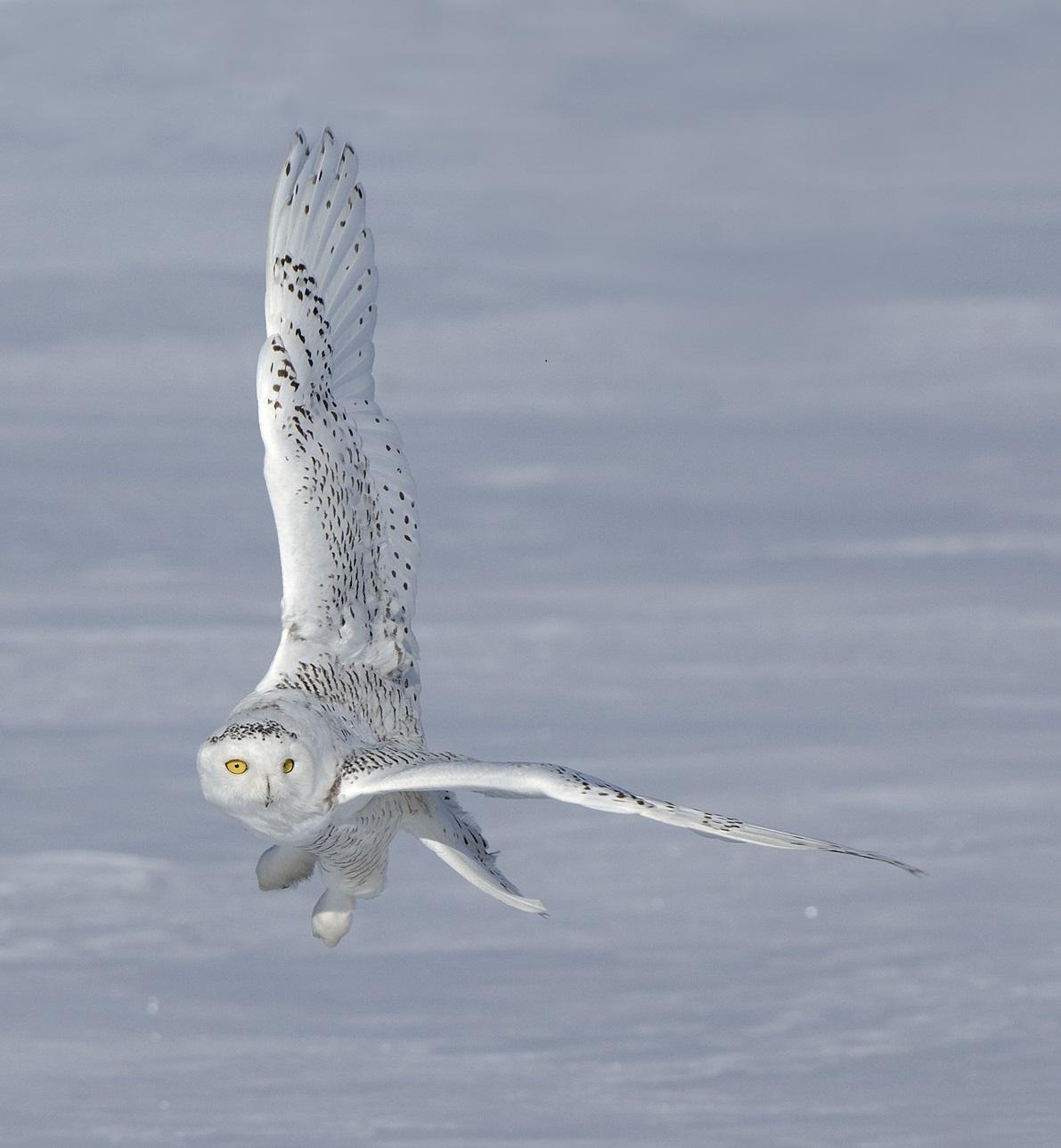
The Snowy Owl is a large, white owl with a smoothly rounded head and striking yellow eyes. Females and young males have dark brown or black markings that can give a salt-and-pepper appearance to the body and wings, but the face is always white. Males tend to be paler than females, and older males may be pure white. 

Weight: 1.6 to 3.0 kg (56 to 104 oz)
Length: 52 to 71 cm (20 to 28 in)

Report Snowy Owl sightings to WildlifeObs@gov.nt.ca

Check out the field guide: Owls of the Northwest Territories
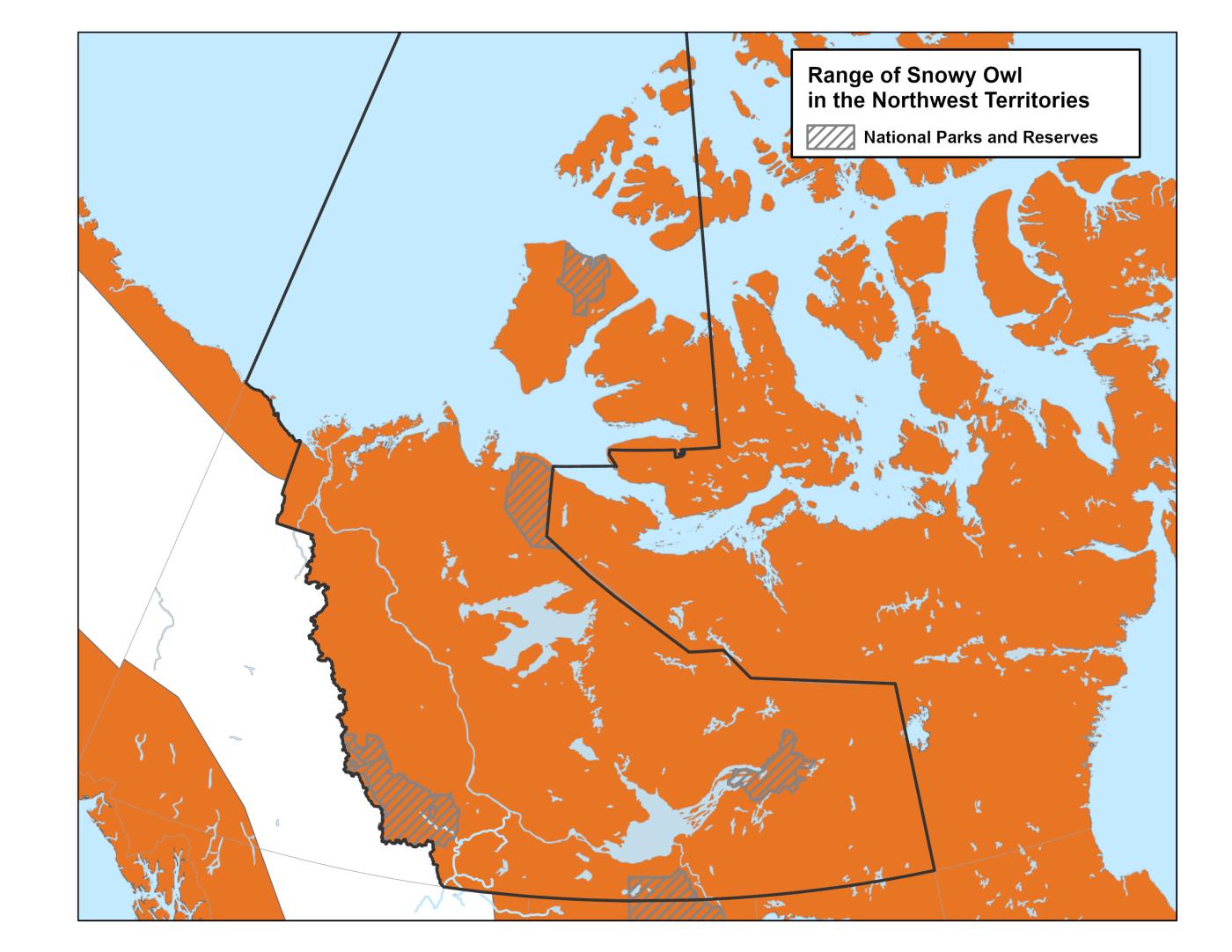
Snowy Owls breed in northern tundra ecosystems around the globe, including on the Arctic islands and mainland tundra of the NWT. Some Snowy Owls remain in the Arctic year-round. Others migrate to spend the winter in southern NWT or other parts of Canada and the USA.

Range map information

Snowy Owls live in treeless, open areas. They nest on the ground in Arctic tundra and other wide-open habitats. Some spend the winter in the Arctic sea ice while others remain on the tundra or move to open habitats further south.

The Snowy Owl is a top predator of the Arctic tundra. During the breeding season, their diet is almost entirely lemmings. In the non-breeding season, their diet includes other prey such as waterfowl, ptarmigan, hares, and other small mammals. Snowy Owls make large-scale irregular movements related to food availability, especially lemming population cycles. This means Snowy Owl numbers at a given location can vary a lot from year to year.

Unlike most other owls, Snowy Owls are active during the day and can hunt at all hours during the continuous summer daylight. They are often seen on the ground, perching on a raised hummock or rock with a good view of their surroundings.

There are an estimated 13,000 to 16,000 mature Snowy Owls in Canada, and data suggest the population is declining. Snowy Owl counts on the wintering range showed an estimated population decline of around 40% over the last 24 years. Indigenous knowledge holders from some northern locations (Baffin Island and the Yukon coast) have reported seeing Snowy Owls less frequently than before.

The Snowy Owl’s Arctic tundra habitat is rapidly changing because of climate change. As shrubs expand, wide-open tundra ecosystems are shrinking towards the north. Snowy Owls and the lemming populations they rely on are affected by changes in temperature, rain and snow - for example, by the formation of ice crusts on the snowpack. 

The NWT Wildlife Act protects Snowy Owl nests and eggs from human disturbance. Snowy Owls are not included under the Migratory Birds Convention Act.

Area
Dehcho Gwich'in Inuvialuit North Slave / Tłı̨chǫ Sahtú South Slave