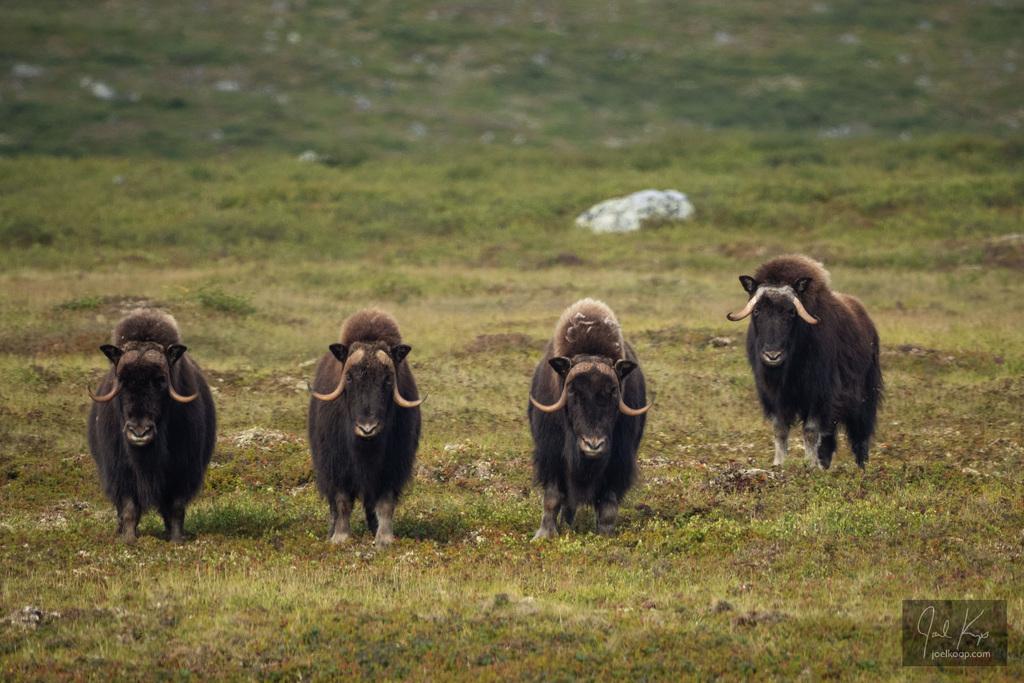
Muskoxen are completely covered with an under layer of short fine wool of exceptional warmth (qiviut), except for the horns, hooves, lips and nose. The longer outer coat of shaggy hair covering the animal is about a half-metre long and often hangs almost to the ground. It gives the muskox its characteristic appearance. Rounded hooves with sharp rims provide traction on ice and rocky surfaces.
The coat is generally dark brown or almost black. It is extremely shaggy on the shoulders and forms a distinct mane, especially noticeable on bulls. Behind the shoulders is a short white or creamy yellow "saddle". The lower legs have light brown to white "stockings". The muskox's inner wool, or ‘qiviut’, is of exceptional quality, with the weight and warmth of cashmere.
Muskoxen are very social animals. They live in loosely organized herds of about 15 animals, or sometimes larger.