Main Content

Short-billed Dowitcher is a medium-sized shorebird that breeds across Canada, including in the Northwest Territories.   Short-billed Dowitchers winter along the Atlantic, Gulf and Caribbean coasts of the United States and Central and South America.

The International Shorebird Survey has shown a large decline in the population of Short-billed Dowitchers.  Sport and subsistence hunting in the southern portion of the wintering range is an important threat. Other threats include loss of wintering habitat; disturbance at migratory stopover sites and on wintering grounds; pollution; and effects of fires and climate change on the breeding grounds. 

Short-billed Dowitcher was assessed as Threatened in Canada in November 2024. 

Additional content for this page is under development.
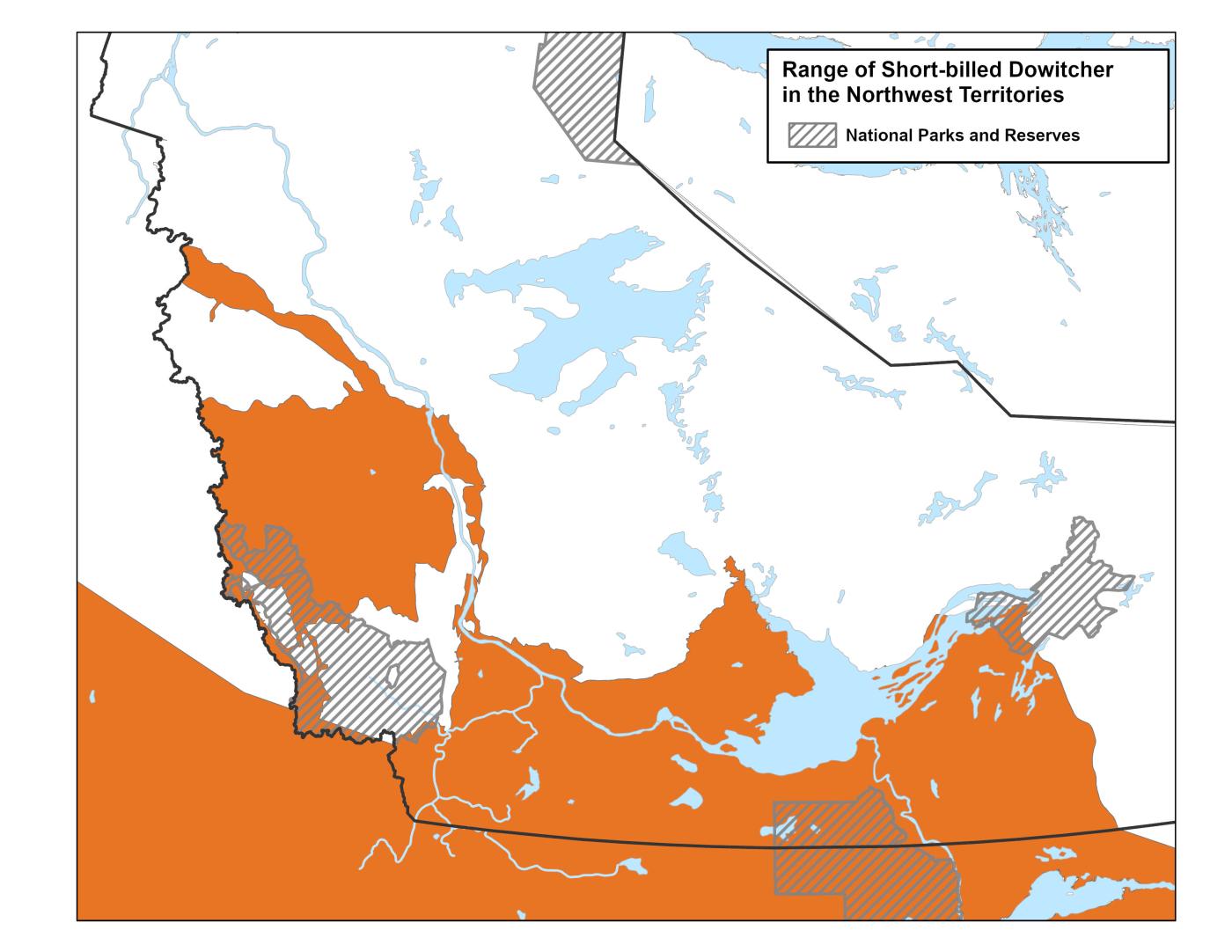
Short-billed Dowitchers nest in wetlands of the boreal forest. They prefer large fens with emergent vegetation like sedges and numerous shallow pools interspersed with shrubs and small trees. In winter, they live in coastal wetlands like estuaries and lagoons. 

Short-billed Dowitchers eat invertebrates including insects, insect larvae, molluscs, worms and crustaceans. They use their bill to probe for food on the muddy bottom, rhythmically moving their bill straight up and down like a sewing machine needle. 

The Short-Billed Dowitcher’s nest is a simple depression on dry ground. Both parents sit on the eggs but only the male looks after the young after they hatch. Short-billed Dowitchers produce only one brood a year, usually laying four eggs; this limited reproductive output makes it harder to recover from population declines.

 The Short-billed Dowitcher population has experienced a large decline. The International Shorebird Survey shows an 85% population decline between 1980 and 2019. 

The Short-billed Dowitcher’s population decline is likely due to multiple, interacting threats. The greatest threat is hunting in the Caribbean and South America where Short-billed Dowitchers are harvested for sport and subsistence. Habitat loss and degradation are other important threats, particularly at migratory stopover sites and in the wintering range. 

Climate change affects Short-billed Dowitchers in all parts of their range, including the NWT. Drying of wetlands, increased risk of high-intensity fires, changes in the timing of snow melt and peak food availability, and extreme weather are expected to affect Short-billed Dowitchers on their northern breeding grounds. 

COSEWIC assessed Short-billed Dowitcher as Threatened in 2024. 

Short-billed Dowitchers and their nests are protected under the federal Migratory Birds Convention Act.

Région
Dehcho Gwich'in Inuvialuit Slave Nord / Tłı̨chǫ Sahtú Slave Sud