Content under development.
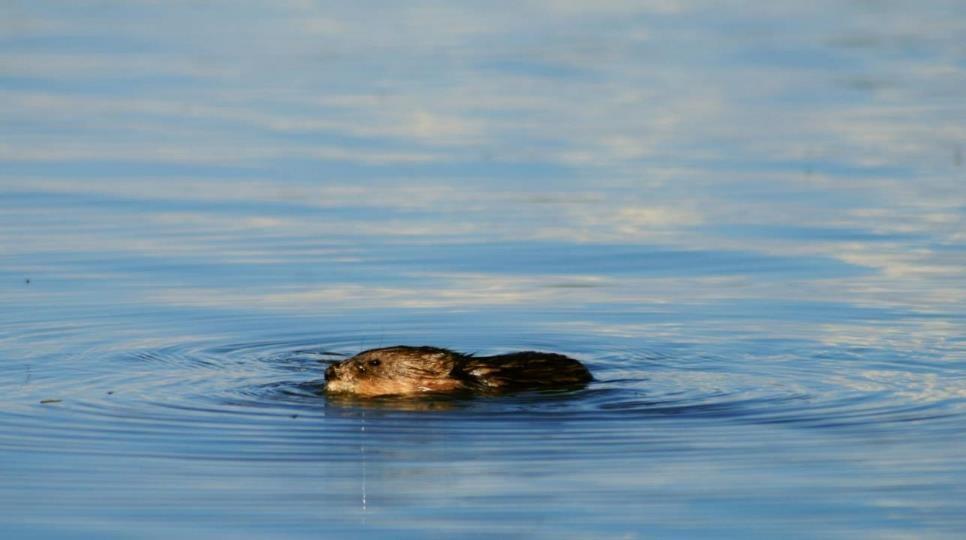
Rat musqué
Ondatra zibethicus
Évaluation du CEPTNO
Préoccupante
Liste des espèces en péril des TNO
À l'étude
Évaluation du COSEPAC
Non évaluée
Liste des espèces en péril du gouvernement fédéral
Sans statut
Classification de la situation générale aux TNO
En sécurité
The Common Muskrat is found throughout most of North America, as well as Europe and Asia where it was introduced from North America. In the NWT, Common Muskrat occurs across the mainland where wetland habitats are suitable. It has not been observed on the Arctic islands.
Common Muskrats live in wetlands and feed on aquatic plants. Their numbers respond strongly to natural flooding and drying processes. They are considered indicators of health in freshwater ecosystems.
Muskrats are excellent swimmers and can stay underwater for long periods of time. They live in burrows dug into the bank or in above-water houses built from vegetation. In the winter, they use push-ups – mounds of mud and insulating vegetation piled over holes in the ice – for shelter and food storage.
Muskrats have been used widely as a source of food, fur, and income by Indigenous harvesters in the NWT. They continue to be valued for economic and cultural reasons.
There is no reliable estimate of Common Muskrat population size in the NWT. The large wetland complexes of the Mackenzie Delta and Slave River Delta support relatively high densities of muskrats compared to other areas.
Although muskrats remain widely distributed and numerous in the NWT, knowledge holders have observed declines in muskrat abundance, as well as adverse impacts to muskrat habitat linked to these declines.
In the NWT, climate change and human water and land use activities are changing water availability and affecting the hydrological cycle of wetlands. Documented ecosystem changes include altered water flow, precipitation, and water levels, as well as shifts in the seasonal timing of spring break-up and flooding. These changes affect the quality and availability of muskrat habitat.
The NWT Species at Risk Committee (SARC) assessed Common Muskrat as a species of Special Concern in the NWT in 2026. The species is under consideration for listing.
The NWT Wildlife Act protects muskrat push-ups from human disturbance.
Région
Dehcho
Gwich'in
Inuvialuit
Slave Nord / Tłı̨chǫ
Sahtú
Slave Sud
Documents d’évaluation